Occupational Therapy Literature Review Assignment Help — Evidence-Based Writing for OT Students

An occupational therapy literature review assignment requires formulation of a PICO research question, structured database searches across OTseeker, CINAHL, PubMed, and the Cochrane Library, quality appraisal of retrieved studies using CASP or PEDro, synthesis, not summary, of findings into a critical academic argument, and correct referencing in Harvard or APA format. Generic essay writing skills are insufficient for an OT literature review: it requires OT-specific evidence literacy, including knowledge of OTseeker as an OT-dedicated database, PEDro scoring thresholds, and the clinical meaningfulness of OT outcome measures beyond statistical significance. This service provides expert help with every stage of an OT literature review assignment, from Level 5 BSc narrative review to MSc systematic review and OTD integrative review.
Get Expert Help With Your OT Literature Review
Written by OT-qualified professionals with systematic review and CASP expertise. PICO construction, database searching, quality appraisal, and synthesis, all stages covered.
Request a QuoteWhat Is an Occupational Therapy Literature Review Assignment?
An occupational therapy literature review assignment requires the student to construct a focused research question, identify and retrieve relevant evidence from OT-specific databases, critically appraise the quality of each included study using a validated tool, and synthesise the appraised findings into a coherent academic argument. The literature review does not express student opinion, it constructs an argument from appraised evidence. The student's role is to evaluate the quality of evidence and synthesise it, not to describe what they personally think about an intervention. This distinction, between student opinion and evidence-based argument, is the most frequently lost mark in OT literature review assignments at Level 5.
The scope of an OT literature review assignment is defined by a focused PICO research question. Boundaries are set by pre-specified inclusion and exclusion criteria. Evidence quality is assessed using a validated appraisal tool, CASP or PEDro. Findings are synthesised under themes or a narrative structure that constructs an answer to the PICO question. Word counts range from 2,500 at Level 5 narrative review to 15,000 or more for an MSc systematic review, with OTD integrative reviews extending to 25,000 words.
Why OT Literature Reviews Are Different from General Healthcare Essays
OT literature reviews must use OT-specific databases: OTseeker is exclusively OT evidence, pre-appraised by OT specialists, and it surfaces studies that general medical databases do not prioritise. CINAHL allied health subject headings capture OT research that keyword searching alone misses. The evidence base for OT interventions is often smaller and of lower hierarchy than medicine, not because OT research is poor, but because the nature of OT practice makes blinding impossible. A therapist cannot be blinded to the OT intervention they are delivering; a client receiving sensory integration therapy cannot be unaware they are receiving it. This structural limitation means OT intervention evidence is predominantly Level 3–4 in the hierarchy, and students writing OT literature reviews must understand this and account for it in their synthesis argument, not treat it as a weakness of the evidence but as a characteristic of the OT research context.
BJOT (British Journal of Occupational Therapy) and AJOT (American Journal of Occupational Therapy) are the primary OT journal sources and are most effectively retrieved through OTseeker and CINAHL rather than PubMed. Clinical meaningfulness in OT literature reviews extends beyond statistical significance: a statistically significant improvement in AMPS motor score may not represent a clinically meaningful change if it does not translate to independent IADL performance for the client population studied.
Systematic, Scoping, Narrative, and Integrative Reviews — Types of OT Literature Reviews
Occupational therapy programmes assign different literature review types depending on the qualification level and the nature of the research question. Each type requires a different level of rigor, different search methodology, and different synthesis expectations.
A systematic review is the most rigorous type. It requires PRISMA-compliant methodology (PRISMA 2020; Page et al., 2021), an exhaustive database search across a minimum of three databases, pre-defined inclusion and exclusion criteria, quality appraisal of every included study using CASP or PEDro, and synthesis of appraised findings. Systematic reviews are typical for BSc Level 6 final-year projects and MSc Level 7 dissertations, with word counts of 6,000–15,000. MSc-level systematic reviews require PRISMA 2020 checklist compliance across all 27 items.
A scoping review maps the breadth of existing evidence on a topic without full quality appraisal. It is appropriate for novel OT topics with limited RCT evidence, areas where the question is "what evidence exists and what form does it take?" rather than "is this intervention effective?" Scoping reviews use a similar PRISMA framework but do not require every included source to be quality appraised.
A narrative review is less rigorous and does not require exhaustive searching. It allows selective inclusion of key studies and constructs a thematic narrative argument. This is the most common type at BSc Level 5, with word counts of 2,500–5,000 words. It does not require a PRISMA diagram, though a search log is increasingly expected.
An integrative review combines both quantitative and qualitative evidence, synthesising different evidence types to address complex OT questions involving both clinical effectiveness and patient experience. This approach is appropriate for complex OT questions that cannot be answered by RCT evidence alone.
When to Use a Systematic Review vs a Narrative Review in OT
A systematic review is appropriate when the OT intervention has an established evidence base, sensory integration for ASD, CIMT for stroke, cognitive rehabilitation for TBI, with sufficient RCT and systematic review evidence to support exhaustive searching. It is required when the assignment brief specifies PRISMA compliance or when the qualification level is BSc Level 6 or Level 7. A narrative review is appropriate when the OT topic has limited or emerging evidence, when the assignment is at BSc Level 5, or when the brief does not specify systematic methods. A scoping review is appropriate when the question is about mapping the landscape, "What is the scope of evidence for telehealth OT?", rather than testing effectiveness: "Is telehealth OT effective for stroke rehabilitation?" Students who are unsure which type their assignment requires should check the brief for the words "PRISMA," "systematic search," or "exhaustive searching", these signal systematic review requirements.
PICO Framework for OT Literature Review Research Questions
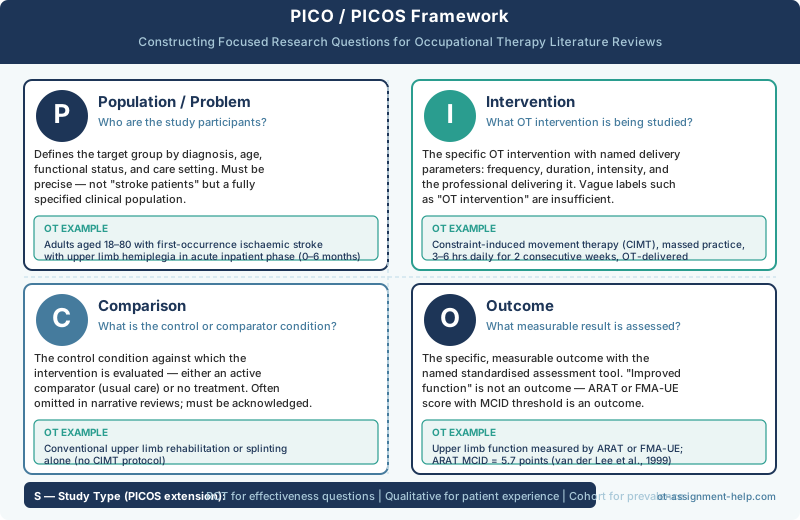
The PICO framework constructs a focused research question that shapes every subsequent stage of the literature review, the database search terms, the inclusion and exclusion criteria, the outcome measures the student extracts from included studies, and the synthesis argument. PICO has four mandatory components: Population, Intervention, Comparison, and Outcome. PICOS adds a fifth, Study type, which specifies the design of studies eligible for inclusion.
The Population component defines the target group with specificity that matches the clinical reality: not "stroke patients" but "adults aged 18–80 with first-occurrence ischaemic stroke presenting with upper limb hemiplegia in the acute inpatient phase (0–6 months post-stroke)." The Intervention component names the specific OT intervention with delivery parameters: "constraint-induced movement therapy (CIMT), massed practice protocol, 3–6 hours daily for 2 consecutive weeks, delivered by an occupational therapist." The Comparison component names the control condition: "conventional upper limb rehabilitation" or "no treatment control." The Outcome component specifies a measurable outcome with a named assessment tool: "upper limb function measured by Action Research Arm Test (ARAT) or Fugl-Meyer Assessment Upper Extremity (FMA-UE)."
The most common PICO errors in OT assignments are: a Population defined too broadly (all stroke patients rather than a specific presentation and phase); an Intervention named too vaguely ("OT intervention" rather than the specific protocol); a Comparison component omitted entirely, which is common in narrative reviews but must at least be acknowledged; and an Outcome specified without a named assessment tool, which makes the review clinically uninterpretable.
Tell Us Your PICO Question — We'll Build the Review
Not sure which review type you need? We'll check your brief and advise before starting work.
Get a QuotePICO Construction Examples for Common OT Review Topics
PICO Example 1 — Sensory Integration for ASD: P: children aged 3–12 years with Autism Spectrum Disorder and sensory processing difficulties confirmed by Sensory Profile 2; I: Ayres Sensory Integration therapy (ASI), clinic-based, OT-delivered, minimum 20 sessions; C: standard OT without ASI protocol or watchful waiting; O: sensory processing measured by Sensory Profile 2 or functional participation measured by COPM.
PICO Example 2 — Cognitive Rehabilitation for TBI: P: adults with moderate to severe TBI (post-traumatic amnesia greater than 1 week), community setting, at least 3 months post-injury; I: occupation-based cognitive rehabilitation including strategy training, errorless learning, and IADL retraining; C: standard community OT without a structured cognitive protocol; O: IADL independence measured by FIM or Barthel Index; cognitive function measured by MoCA or LOTCA.
PICO Example 3 — Falls Prevention in Older Adults: P: community-dwelling adults aged 65 and above, with at least one fall in the previous 12 months; I: OT home hazard assessment and modification programme; C: no home modification; O: falls incidence over 12 months, ADL confidence measured by the Falls Efficacy Scale (FES-I). Each of these examples demonstrates a fully constructed PICO with a named assessment tool in the Outcome component, the level of specificity required for an OT literature review at Level 5 and above.
Best Databases for Occupational Therapy Literature Reviews — OTseeker, CINAHL, PubMed, and Cochrane
OTseeker provides the most targeted starting point for OT literature searches because it is specifically designed for OT evidence and pre-appraises included studies. OTseeker (otseeker.com) offers free access, covers RCTs and systematic reviews relevant to occupational therapy, and allows searching by diagnosis, intervention, assessment tool, or OT practice area. Its limitation is size, OTseeker's database is smaller than CINAHL or PubMed, and recent publications may not yet be indexed. Always begin with OTseeker, but a systematic review requires OTseeker plus at minimum two further databases.
CINAHL (Cumulative Index to Nursing and Allied Health Literature) retrieves allied health literature using the subject heading "Occupational Therapy", this must be applied as a subject heading rather than a keyword search for precision. CINAHL is accessible through most UK university library portals. Apply filters for peer-reviewed publications, English language, and publication date range (typically last 10 years for narrative reviews, last 5 years for systematic reviews).
PubMed/MEDLINE provides free access at pubmed.ncbi.nlm.nih.gov. The correct MeSH term for OT is "Occupational Therapy" [MeSH], combined with a condition MeSH term: "Stroke Rehabilitation" [MeSH] AND "Occupational Therapy" [MeSH]. The Cochrane Library (cochranelibrary.com) provides free access to abstracts and contains the highest-level systematic review evidence. Cochrane review groups relevant to OT include the Cochrane Stroke Group, Cochrane Child Health, and Cochrane Common Mental Disorders. AMED (Allied and Complementary Medicine Database) serves as a secondary database with OT journal coverage, accessible through most UK university library systems.
Boolean operators structure all OT database searches. AND narrows the search, "occupational therapy" AND "stroke" AND "upper limb". OR broadens the search, "CIMT" OR "constraint-induced movement therapy". NOT excludes a term, NOT "paediatric." Phrase searching, placing a term in quotation marks, forces exact phrase retrieval and prevents the database from splitting multi-word terms.
| Database | Access | OT-Specific? | Subject Heading | Best For |
|---|---|---|---|---|
| OTseeker | Free (otseeker.com) | Yes — exclusively OT | Search by OT area, diagnosis, intervention | First-line OT evidence search; pre-appraised RCTs and reviews |
| CINAHL | University library portal | Allied health including OT | "Occupational Therapy" as subject heading | Comprehensive allied health literature; BJOT coverage |
| PubMed / MEDLINE | Free (pubmed.ncbi.nlm.nih.gov) | Medical and rehabilitation | "Occupational Therapy" [MeSH] | Rehabilitation medicine; stroke and neurological OT evidence |
| Cochrane Library | Free abstracts (cochranelibrary.com) | Systematic reviews | Search by review group (Stroke, Child Health) | Highest-level systematic review and meta-analysis evidence |
| AMED | University library portal | Allied and complementary medicine | Subject heading search by OT term | Supplementary OT and allied health journal coverage |
Constructing a Search String for OT Literature Reviews
A CINAHL search string for sensory integration and ASD takes the following form: ("sensory integration" OR "sensory processing" OR "Ayres Sensory Integration") AND ("autism" OR "autistic spectrum disorder" OR "ASD") AND ("occupational therapy" OR "OT"). This string uses OR to capture alternative terminology within each PICO component and AND to combine the three components. Applied inclusion criteria: English language; peer-reviewed; publication dates 2015–2025; human subjects; intervention study designs (RCT, quasi-experimental, or systematic review). Applied exclusion criteria: case reports with n less than 3; non-clinical populations; letters and editorials; full text unavailable.
The PRISMA flow documents every stage of the search process. Step 1 Identification: total records identified across all databases, for example, n=342. Step 2 Screening: records screened by title and abstract, with duplicates removed, for example, n=342 screened, n=67 remaining after duplicate removal. Step 3 Eligibility: full texts reviewed against inclusion criteria, for example, n=67 full texts reviewed, n=18 meeting all inclusion criteria. Step 4 Included: studies included in the final review after quality threshold applied, for example, n=12 included. A PRISMA flow diagram is a required component of systematic reviews at Level 6 and Level 7, and is increasingly expected in structured narrative reviews at Level 5.
Quality Appraisal in OT Literature Reviews — CASP and PEDro
Quality appraisal determines how much weight each study's findings receive in the synthesis argument, a poorly designed RCT with high risk of bias cannot support a strong evidence claim in the same way that a well-designed RCT with low bias can. Every included study requires appraisal, and every appraisal result must be discussed in the synthesis body, not only listed in a data extraction table.
CASP (Critical Appraisal Skills Programme) provides separate checklists for different study designs: 11 items for RCTs, 10 items for qualitative studies, 10 items for systematic reviews, and 12 items for cohort studies. All items are answered Yes, No, or Can't Tell. For the RCT checklist, Section A (three items addressing validity of randomisation, allocation concealment, and blinding) provides the core validity assessment, a majority of Yes answers indicates high quality; Can't Tell answers in this section indicate moderate quality with unverifiable methodology; No answers identify specific bias types. Section B (five items addressing precision of results, confidence intervals, and baseline comparability) requires numerical data extraction. Section C (three items addressing generalisability) assesses whether the study findings apply to the student's PICO population.
PEDro (Physiotherapy Evidence Database) applies an 11-item scale scored 0 or 1. The eligibility criteria item is not counted in the total, giving a maximum score of 10. Items include: random allocation (0/1), concealed allocation (0/1), baseline comparability (0/1), blind subjects (0/1), blind therapists (0/1), blind assessors (0/1), adequate follow-up (0/1), intention-to-treat analysis (0/1), between-group statistical comparison (0/1), and point measures with variability data (0/1). Scores of 6/10 or above indicate high quality; 4–5/10 indicate moderate quality; 3/10 or below indicate low quality. PEDro scores for many rehabilitation RCTs are publicly available at pedro.org.au, which students can retrieve without performing their own scoring.
The GRADE framework assesses evidence certainty for systematic reviews, rated as high, moderate, low, or very low certainty, and is required at MSc Level 7 systematic review. Evidence certainty is downgraded for risk of bias, inconsistency, indirectness, imprecision, or publication bias. In academic writing, appraisal results must be integrated into the synthesis body: "Smith et al. (2021) scored 7/10 on PEDro, suggesting moderate to high quality; however, the absence of assessor blinding (item 7 = 0) introduces detection bias risk that may inflate the reported effect on ARAT scores."
Common Quality Appraisal Errors in OT Literature Review Assignments
CASP errors fall into two categories: completing CASP as a box-ticking exercise without applying scores to the synthesis, and failing to identify which specific bias type corresponds to a No answer. A No answer to CASP item 2 ("Was the allocation to treatment groups randomised?") indicates selection bias, not a generic quality limitation. Reporting "this study had some methodological weaknesses" without identifying the bias type earns no marks on appraisal criteria. PEDro errors include misinterpreting a score of 5/10 as "half good", a 5/10 indicates moderate quality with specific methodological limitations that must be named.
Evidence hierarchy errors include treating all RCTs as equivalent regardless of PEDro score, a PEDro 3/10 RCT carries significantly less evidential weight than a PEDro 8/10 RCT, and citing non-OT-specific Cochrane reviews as fully applicable to OT practice without discussing OT-specific limitations. A Cochrane review on upper limb rehabilitation post-stroke that combines physiotherapy and OT interventions without separating them cannot be cited as direct evidence for OT-specific CIMT protocols without explicit qualification.
Synthesising OT Evidence — From Study Findings to Academic Argument
The most common error in OT literature review assignments is summarising studies rather than synthesising them. Summary describes what each study found in sequence, the student produces a paragraph per study, reporting findings one after another without comparing, contrasting, or constructing an argument. Synthesis constructs an argument using multiple studies as evidence, with their quality appraisal scores informing the weight given to each finding.
A summary paragraph looks like this: "Smith et al. (2021) found that CIMT improved ARAT scores by 4.2 points (p<0.05). Jones et al. (2020) found that CIMT improved ARAT scores by 3.8 points (p<0.05). Brown et al. (2019) found that CIMT improved ARAT scores by 5.1 points (p=0.01)." This paragraph provides no argument, no appraisal, and no synthesis, it is a sequence of reported findings.
A synthesis paragraph looks like this: "Across three RCTs of moderate to high quality (PEDro range 6–8/10), CIMT produced statistically significant improvements in upper limb function assessed by ARAT (Smith et al., 2021: 4.2 points; Jones et al., 2020: 3.8 points; Brown et al., 2019: 5.1 points). The consistency of findings across heterogeneous populations, from acute to chronic stroke, unilateral cortical presentations, suggests a robust effect for upper limb motor recovery. However, effect sizes fall below the ARAT minimal clinically important difference (MCID) of 5.7 points established by van der Lee et al. (1999), raising questions about clinical rather than merely statistical significance for this intervention in the acute phase." This paragraph groups studies, references their quality scores, constructs a direction of evidence, and introduces a critical argument about clinical meaningfulness.
The structure of a narrative synthesis assignment runs: an introduction that states the PICO question, review scope, and number of included studies; a body organised under thematic sections grouping studies by outcome or population subgroup; a discussion assessing the overall strength of evidence, its limitations, and implications for OT practice; and a conclusion that answers the PICO question directly, with an honest statement of the confidence warranted by the available evidence.
Is your OT literature review focused on a specific intervention, such as sensory integration, CIMT, or cognitive rehabilitation, or on an assessment tool or client population? The PICO question, database strategy, and evidence quality characteristics differ substantially by topic area.
Sensory Integration, CIMT, and Cognitive Rehabilitation — Common OT Literature Review Topics
Sensory integration therapy for ASD represents one of the most frequently reviewed OT intervention topics. The evidence base is predominantly qualitative and small-scale RCTs, very few high-powered trials exist. Students reviewing this topic should expect CASP quality ratings of low to moderate for most included studies. The Ayres Sensory Integration fidelity measure is the key methodological reference for identifying whether study interventions constitute genuine ASI therapy. The AJOT 2020 systematic review on ASI for ASD provides the most current and authoritative synthesis point.
CIMT for stroke upper limb rehabilitation has the strongest OT evidence base, multiple Cochrane reviews and high-quality RCTs, with the Cochrane Stroke Group as the primary source of Level 1 systematic review evidence. Taub's original 2006 trial provides the foundational evidence. Modified CIMT protocols for home OT settings offer a less intensive alternative for students whose PICO addresses community settings. Cognitive rehabilitation for TBI draws on Cochrane review evidence for errorless learning and strategy training approaches, with IADL retraining RCT evidence available in BJOT.
For topic-specific OT assignment support, see our autism OT assignment help page for sensory integration and ASI evidence, and our neurological occupational therapy assignment help page for cognitive rehabilitation and TBI literature.
Harvard and APA Referencing for OT Literature Reviews
Harvard referencing is the standard for UK OT programmes. The journal article format in Harvard is: Author(s) (Year) 'Title of article', Journal Name, Volume(Issue), pp. First–Last. DOI. For example: Law, M., Baptiste, S., Carswell, A., McColl, M.A., Polatajko, H. and Pollock, N. (2019) 'Canadian Occupational Performance Measure (COPM) — 5th edition', Canadian Journal of Occupational Therapy, 56(2), pp. 82–87. https://doi.org/[DOI].
APA 7th edition is used in Australian and North American OT programmes. The journal article format is: Author(s) (Year). Title of article. Journal Name, Volume(Issue), pages. DOI. The HCPC citation in Harvard format is: HCPC (2013) Standards of Proficiency: Occupational Therapists. London: HCPC. Common errors include missing DOIs, incorrect capitalisation of journal article titles (title case in APA, sentence case for article titles in Harvard), and omitting edition numbers for textbooks. For evidence-based practice assignment support see our evidence-based practice in OT literature reviews page. For literature review assignments requiring OTPF framework references or AOTA source guidance, see our OTPF literature and academic source guidance page. For literature reviews focused on MOHO evidence, occupational identity research, or MOHOST outcome studies, see our MOHO research literature for OT literature review assignments resource.
Ready to Get Expert Help With Your OT Literature Review?
PICO construction, database searching, CASP/PEDro appraisal, and synthesis argument, all delivered by OT-qualified professionals with systematic review expertise.
Request a Quote NowFrequently Asked Questions — OT Literature Review Assignment
How many studies do I need to include in an OT literature review assignment?
This depends on the review type and qualification level. A BSc narrative review at Level 5 typically requires a minimum of 5–8 peer-reviewed studies published within the last 10 years. A systematic review at Level 6 typically requires a minimum of 5–12 studies meeting the inclusion criteria, the number is determined by the search process, not pre-set. An MSc systematic review at Level 7 should include all studies meeting the PICO inclusion criteria regardless of how many that produces, exhaustive searching is the defining feature. Quality matters more than quantity: 6 well-appraised high-quality studies produce a stronger review than 20 studies included uncritically.
What is the difference between a systematic review and a literature review in OT?
A systematic review is a specific, highly rigorous type of literature review characterised by: a pre-specified PICO research question, a documented exhaustive search across multiple databases, pre-defined inclusion/exclusion criteria, quality appraisal of every included study using CASP or PEDro, a PRISMA 2020 flow diagram, and a formal synthesis. A narrative literature review is less rigorous: it may not require exhaustive searching, may include studies selectively, and typically produces a thematic narrative argument. Most BSc Level 5 assignments are narrative reviews; BSc Level 6 and MSc Level 7 assignments are increasingly systematic or scoping in design.
Can I use OTseeker alone for my OT literature review or do I need other databases?
OTseeker is a valuable starting point because it is specifically designed for OT evidence and pre-appraises included studies. However, OTseeker alone is insufficient for a systematic review at Level 6 or above, the assignment requires searches across a minimum of 3 databases to demonstrate exhaustive searching. Recommended combinations: OTseeker plus CINAHL plus Cochrane Library for most OT intervention topics; OTseeker plus CINAHL plus PubMed/MEDLINE for broader rehabilitation topics. AMED can be added as a fourth source. The PRISMA flow diagram must document all databases searched and the number of records retrieved from each.
What is a CASP appraisal and how do I apply it to an OT study?
CASP (Critical Appraisal Skills Programme) is a set of checklists used to evaluate the methodological quality of research studies. The CASP RCT checklist has 11 items answered Yes/No/Can't tell, grouped into validity (Section A, 3 items), results (Section B, 5 items), and applicability (Section C, 3 items). For an OT literature review, each included study is appraised using the relevant CASP checklist. Scores are documented in a data extraction table and summarised in the synthesis. The appraisal must explain what any "No" answers mean, a No to allocation concealment (CASP item 2) introduces selection bias that may inflate the intervention effect.
Does my OT literature review need to include a PRISMA flow diagram?
A PRISMA flow diagram is required for systematic reviews at BSc Level 6 and MSc Level 7, and is increasingly expected at Level 5 for literature reviews that follow a structured search process. PRISMA 2020 (Page et al., 2021) includes four stages: Identification (records identified from databases), Screening (records screened, duplicates removed), Eligibility (full texts assessed, reasons for exclusion recorded), and Included (studies meeting all inclusion criteria). For a narrative review at BSc Level 5, a search log, a table documenting databases searched, search strings used, and records retrieved, may be accepted in place of a formal PRISMA diagram; always check your assignment brief.