Neurological Occupational Therapy Assignment Help — Stroke, TBI, Assessments, and Neurorehabilitation Interventions
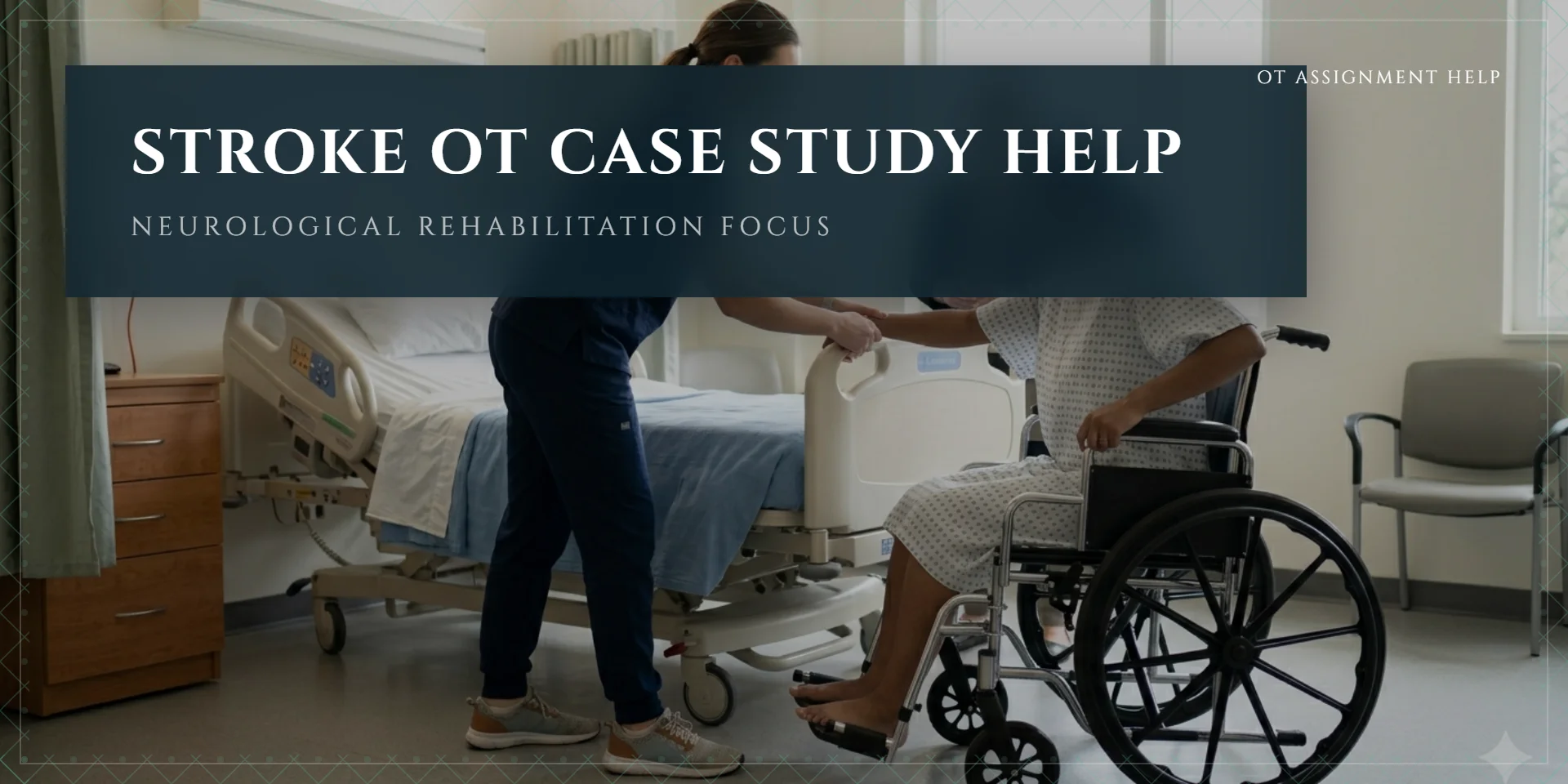
Neurological occupational therapy addresses the functional, occupational, and participation consequences of neurological conditions including stroke, traumatic brain injury, multiple sclerosis, Parkinson's disease, motor neurone disease, and spinal cord injury. Neurological OT academic assignments require precise condition classification, accurate assessment scoring (FIM 18–126, Barthel Index 0–100, ARAT 0–57, Fugl-Meyer upper limb 0–66, MoCA 0–30), evidence-based intervention description (CIMT protocol: 3–6 hours per day, 2-week duration, 90% waking hours restraint), and justification of motor learning principles. This service provides expert neurological OT assignment help for BSc and MSc students across all these clinical areas.
Get Expert Neurological OT Assignment Help — Request a Quote
FIM scoring, Barthel interpretation, CIMT protocol, and Hoehn and Yahr stages written with clinical precision. Qualified OTs. Confidential service.
Request a QuoteOT in Neurological Rehabilitation — Conditions, Settings, and Roles
Neurological occupational therapy assesses and supports occupational performance across the neurological rehabilitation pathway, from acute presentation through inpatient rehabilitation to community reintegration. OT roles differ significantly at each stage, and correctly contextualising the setting is the first step in a credible neurological OT case study assignment.
On an acute neurology ward, OT focuses on functional assessment (FIM and Barthel Index as baseline measures), early mobilisation and sitting tolerance, screening for unilateral neglect and perceptual difficulties, and safe swallowing liaison with the MDT. The primary occupational goal in the acute phase is safe and supported engagement in basic self-care occupations alongside establishing a functional baseline for rehabilitation planning. In an inpatient neurorehabilitation unit, OT delivers intensive functional retraining: ARAT and Fugl-Meyer Upper Limb assessment for upper limb goal tracking, CIMT eligibility screening, ADL retraining using task-specific training principles, cognitive rehabilitation for TBI or post-stroke cognitive impairment, and goal setting with the client using COPM. In the community, OT coordinates home assessment and modification, driving rehabilitation, vocational rehabilitation, fatigue management, and community reintegration planning. MoCA or COTNAB may be administered in the community phase for cognitive function assessment relevant to driving and return-to-work decisions.
Neurological Conditions in OT Assignments — Classification and Clinical Significance
Neurological conditions in OT assignments require correct classification before any assessment or intervention discussion. The most common errors are writing "CVA" without specifying ischaemic or haemorrhagic, describing MS without identifying the relapse-remission pattern, and describing Parkinson's without referencing Hoehn and Yahr stage. All three signal a failure of condition-specific clinical knowledge and consistently result in mark loss.
Stroke Classification and OT Implications
Stroke is classified as ischaemic (87% of strokes: thrombotic or embolic, caused by arterial blockage) or haemorrhagic (13%: intracerebral or subarachnoid, caused by arterial rupture). A transient ischaemic attack (TIA) produces stroke-like symptoms that resolve within 24 hours (traditional definition) or 1 hour (new definition), with no infarction on imaging. OT implications differ by type: ischaemic stroke produces the unilateral hemiplegia and upper limb motor deficits for which CIMT and task-specific training are the primary evidence-based OT interventions, and the evidence base for these interventions is almost entirely from ischaemic stroke populations. Haemorrhagic stroke may produce a different recovery trajectory; subarachnoid haemorrhage is associated with cognitive fatigue and executive function difficulties that may persist after motor recovery. TIA warrants OT secondary prevention input: driving assessment, lifestyle modification, occupation-specific risk management. The OT-relevant consequences of stroke include hemiplegia or hemiparesis, sensory loss, hemianopia, unilateral neglect, aphasia, dysphagia, cognitive impairment (attention, memory, executive function), fatigue, emotional lability, and depression.
TBI, MS, and MND Classification in OT Assignments
Traumatic brain injury (TBI) severity is classified using the Glasgow Coma Scale (GCS): Severe TBI (GCS 3–8 at initial assessment); Moderate TBI (GCS 9–12); Mild TBI (GCS 13–15). GCS measures three domains: Eye opening (1–4), Verbal response (1–5), and Motor response (1–6), with a maximum total score of 15 indicating full consciousness. Students who write "the client sustained a severe TBI" without stating the GCS score demonstrate superficial condition knowledge. In an assignment, always specify the GCS score and its band. OT-relevant TBI consequences include cognitive difficulties (attention, memory, executive function, insight deficits), physical difficulties (hemiplegia, ataxia, balance), behavioural changes (disinhibition, impulsivity, apathy), fatigue, and communication difficulties.
Multiple sclerosis is classified by disease course: Relapsing-Remitting MS (RRMS, 85% at onset) produces discrete relapses with full or partial recovery between episodes; Primary Progressive MS (PPMS, approximately 15%) produces steady neurological decline from onset without relapses; Secondary Progressive MS (SPMS) follows an initial RRMS course with subsequent progressive decline. OT goal trajectory differs fundamentally between RRMS (goals focus on maintaining occupational performance between relapses and fatigue management) and PPMS (goals address progressive disability management, energy conservation, and assistive technology). Motor Neurone Disease (MND) is progressive and fatal. OT role evolves as function declines: early phase covers energy conservation, adapted equipment, and joint protection; middle phase covers power wheelchair assessment, augmentative communication device, and environmental control systems; late phase covers positioning, pressure care, and palliative occupational goal focus. OT assignments on MND should reflect this progressive framework.
Parkinson's Disease — Hoehn and Yahr Stages and OT Focus
The Hoehn and Yahr (H&Y) scale classifies Parkinson's disease progression across five stages, each with distinct OT implications. Stage 1 (unilateral disease only, minimal functional disability): tremor, rigidity, or bradykinesia on one side; OT focus: fine motor assessment, handwriting assessment, early energy conservation education. Stage 2 (bilateral or midline involvement, no balance impairment): OT focus: ADL assessment including handwriting and self-care tasks, home safety assessment, early driving assessment. Stage 3 (mild-to-moderate bilateral disease with some postural instability): OT focus: falls risk assessment, home modification, major ADL adaptations, driving reassessment. Stage 4 (severely disabling disease, still able to walk or stand unassisted): OT focus: major home modification, assistive technology prescription, caregiver training, fatigue management, communication support. Stage 5 (wheelchair dependent or bedridden): OT focus: seating and positioning, pressure relief, supported communication, IADL with maximum assistance. Specifying the H&Y stage is mandatory in a Parkinson's case study assignment, as the OT role at Stage 2 is fundamentally different from the OT role at Stage 4.
Spinal Cord Injury — ASIA Classification A–E
Spinal cord injury severity is classified using the American Spinal Injury Association (ASIA) Impairment Scale: ASIA A (Complete) has no sensory or motor function preserved in sacral segments S4–S5; ASIA B (Sensory Incomplete) has sensory but not motor function preserved below the neurological level, including S4–S5; ASIA C (Motor Incomplete) has motor function preserved below the neurological level, but more than half of key muscles below the neurological level of injury (NLI) have muscle grade less than 3; ASIA D (Motor Incomplete) has motor function preserved below the NLI, with at least half of key muscles having grade 3 or above; ASIA E (Normal) has normal sensory and motor function, though pain or tone changes may persist. OT goal setting is directly determined by ASIA classification: ASIA A (complete SCI) OT focuses on compensatory strategies, assistive technology, and wheelchair skills training. ASIA C/D (incomplete SCI) OT may combine restorative approaches (task-specific training to exploit partial motor preservation) with compensatory strategies.
Neurological OT Assessments — FIM, Barthel, ARAT, Fugl-Meyer, MoCA, and More
Standardised neurological OT assessments produce the specific numerical evidence that demonstrates clinical assessment literacy in assignments. "The FIM showed moderate dependence" earns few marks. "The FIM total score of 68 placed the client in the Minimum Assistance band (54–71), indicating 25–49% assistance required, with a motor subscale score of 52/91 and a cognitive subscale score of 16/35" demonstrates assessment competence. Every assessment used in a neurological OT case study must be reported with its specific score, the correct interpretation band, and a clinical interpretation connecting the score to occupational performance.
FIM — Functional Independence Measure Scoring and Interpretation
The Functional Independence Measure (FIM) assesses functional independence across 18 items on a 7-point scale: 1 = Total Assistance (client performs less than 25% of the task); 2 = Maximal Assistance (25–49% effort); 3 = Moderate Assistance (50–74% effort); 4 = Minimal Assistance (75%+ effort but requires physical contact); 5 = Supervision (standby assistance or cueing only); 6 = Modified Independence (uses a device or requires extra time, but no helper); 7 = Complete Independence (no helper, no device, safe, within reasonable time).
FIM contains 13 motor items (range 13–91) grouped into: Self-Care (6 items: eating, grooming, bathing, dressing upper body, dressing lower body, toileting); Sphincter Control (2 items: bladder management, bowel management); Transfers (3 items: bed/chair/wheelchair, toilet, tub/shower); Locomotion (2 items: walking or wheelchair, stairs). The 5 cognitive items (range 5–35) comprise: Communication (2 items: comprehension, expression); Social Cognition (3 items: social interaction, problem solving, memory). Total FIM range 18–126.
| Total FIM Score | Level | Assistance Required |
|---|---|---|
| 126 | Complete Independence | No helper, no device, safe, timely |
| 108–125 | Complete Independence with Device | No helper; uses equipment |
| 90–107 | Modified Independence | Device or extra time; no helper |
| 72–89 | Supervision | Standby only; no physical contact |
| 54–71 | Minimum Assistance | 25–49% assistance required |
| 36–53 | Moderate Assistance | 50–74% assistance required |
| 19–35 | Maximum Assistance | 75%+ assistance required |
| 18 | Total Dependence | Client performs less than 25% of all tasks |
A worked FIM documentation example: "FIM Eating scored 4/7 (Minimal Assistance) — the client required light physical contact to stabilise the bowl and verbal cueing to monitor pacing. FIM Dressing Upper Body scored 3/7 (Moderate Assistance), requiring verbal cueing for sequencing and physical assist for fastening. FIM total 68/126 (Minimum Assistance band), motor subscale 52/91, cognitive subscale 16/35." This level of item-level and subscale reporting is what examiners expect at Level 6 and above.
Barthel Index — Scoring, Items, and Interpretation Bands
The Barthel Index measures functional independence across 10 ADL items: Feeding, Moving from wheelchair to bed and return, Personal toilet/grooming, Getting on and off toilet, Bathing, Walking on level surface (or propelling wheelchair if unable to walk), Ascending and descending stairs, Dressing, Controlling bowel, Controlling bladder. Scoring uses 5-point increments, producing a total range of 0–100. Interpretation bands: 0–20 = Total dependence; 21–40 = Severe dependence; 41–60 = Moderate dependence; 61–80 = Mild dependence; 81–99 = Minimal dependence; 100 = Independent on these 10 items. Key assignment caveat: a Barthel score of 100 does not indicate complete independence. It indicates independence on the 10 measured basic ADL items only. The Barthel does not assess instrumental ADL (cooking, driving, financial management), cognitive function, or community participation. In assignments, note that Barthel must be complemented by IADL and cognitive assessments for a complete occupational performance picture.
ARAT, Fugl-Meyer, MoCA, DASH, and COTNAB
The Action Research Arm Test (ARAT) measures upper limb function across 4 subscales: Grasp (6 items), Grip (4 items), Pinch (6 items), and Gross Movement (3 items); each item rated 0–3 (0 = no movement, 3 = normal); total range 0–57. Minimal clinically important difference (MCID): approximately 5.7 points. ARAT is most sensitive to functional upper limb performance change and is appropriate for measuring CIMT outcomes.
The Fugl-Meyer Assessment Upper Extremity (FMA-UE) measures volitional upper limb movement recovery based on Brunnstrom stages across 33 items rated 0–2 (0 = cannot perform, 1 = partial, 2 = full); total range 0–66. Sub-scores are reported separately for shoulder/elbow/forearm (maximum 36), wrist (10), hand (14), and coordination/speed (6). MCID approximately 4.25–7 points. FMA-UE is most sensitive to early and middle recovery and appropriate for documenting neuromotor recovery trajectory.
The Montreal Cognitive Assessment (MoCA) screens for mild cognitive impairment; range 0–30; normal score 26 or above; 18–25 suggests mild cognitive impairment; 10–17 suggests moderate range. MoCA assesses 7 domains: visuospatial/executive (5 points), naming (3), attention (6), language (3), abstraction (2), delayed recall (5), orientation (6). Administration time is approximately 10 minutes. The DASH (Disabilities of the Arm, Shoulder and Hand) is a 30-item patient-reported outcome; range 0–100 (0 = no disability, 100 = maximum disability); MCID approximately 11 points. DASH is used in hand therapy and upper limb neurological OT assignments. COTNAB (Chessington Occupational Therapy Neurological Assessment Battery) has 4 sections (visual perception, spatial ability, following instructions, scanning and searching) and is a performance-based cognitive assessment for adults post-acquired brain injury, commonly used in driving and vocational rehabilitation assessment.
CIMT — Constraint-Induced Movement Therapy Protocol in OT Assignments
Constraint-Induced Movement Therapy (CIMT) is the highest-evidence upper limb OT intervention for stroke rehabilitation and the intervention most frequently described inaccurately in academic assignments. Students who write "CIMT was used to improve arm function" without specifying protocol parameters demonstrate superficial knowledge. The examiner expects protocol precision: intensity, duration, restraint parameters, technique, and eligibility criteria.
The CIMT protocol involves: Massed practice (3–6 hours per day of intensive, task-directed upper limb training using the affected limb); Duration (typically 14 consecutive working days, i.e. 2 weeks); Restraint (the less-affected limb is restrained using a padded mitt or sling worn for 90% of waking hours during the 2-week protocol); Technique (shaping, involving progressive approximations toward the target movement, with each attempt positively reinforced and task demands progressively increased); Eligibility criteria (10° or more of active wrist extension, 10° or more of active extension in the thumb and at least 2 fingers, Modified Ashworth Scale spasticity 2 or below, adequate cognition to follow instructions, and typically 3 or more months post-stroke). The EXCITE trial (Wolf et al., 2006) is the foundational RCT; Cochrane review evidence supports CIMT for upper limb function improvement post-stroke and it is included in NICE Stroke Guidelines as a recommended intervention.
Modified CIMT (mCIMT) reduces the intensity to 1–3 hours per day and uses shorter restraint periods, making the protocol feasible in outpatient settings where 6-hour daily sessions are not practical. In assignments, specify which protocol variant was used and justify the selection based on the client's eligibility and the clinical setting's resources. Stating "CIMT" without specifying parameters conflates full CIMT and mCIMT, which have different protocol demands and slightly different evidence bases.
Task-Specific Training, Motor Learning, and Intervention Approaches
Task-specific training applies five principles that must be stated with specificity in neurological OT assignment intervention sections: (1) Practice of the actual occupation or task (not isolated exercise, but the functional occupation itself); (2) Progressive difficulty (task demands increase as performance improves); (3) High repetition (20–50+ repetitions per task per session to drive use-dependent neuroplasticity); (4) Variability of practice (varying contexts, objects, and surfaces to promote transfer from practice to real life); (5) Intermittent feedback (feedback provided after groups of attempts rather than after each attempt, which promotes better long-term motor learning than continuous feedback).
Motor learning principles provide the theoretical justification for task-specific training. Blocked practice (repeating the same task sequentially in a session) produces better within-session performance but poorer retention and transfer. Random practice (varying tasks within a session) produces better retention and transfer; for OT assignments, random practice is theoretically preferred for long-term functional gains despite appearing less efficient within sessions. Two types of feedback are distinguished: Knowledge of Results (KR, feedback about the outcome of the movement) and Knowledge of Performance (KP, feedback about the movement pattern). Both are clinically relevant; KR is most directly applicable to functional OT goals. Reducing feedback frequency (guidance hypothesis) produces better long-term learning than continuous feedback, as over-cueing creates dependency and reduces the client's intrinsic error detection. Fitts and Posner's three stages of motor learning (cognitive: conscious attention required; associative: accuracy improving, less conscious effort; autonomous: automatic performance without conscious monitoring) provide the developmental framework for understanding where a client is in their rehabilitation progress. For how these principles are applied in clinical reasoning, particularly scientific and procedural reasoning, see our dedicated clinical reasoning page.
Compensatory vs Restorative Approach — Assignment Argument Structure
The compensatory approach changes the task, the environment, or the method to enable occupation despite the neurological impairment, and is appropriate when neurological recovery is limited or when a functional plateau has been reached. Examples: one-handed dressing technique, adapted cutlery for upper limb hemiplegia, powered wheelchair for independent mobility in severe motor impairment, environmental control system for SCI. The restorative approach aims to recover neurological function through activity and training, supported by neuroplasticity evidence (use-dependent cortical reorganisation). Examples: CIMT, task-specific training, bilateral training, mirror therapy. Restorative approaches are theoretically preferred in the early recovery phase when neurological recovery potential is greatest; compensatory approaches are selected when recovery potential is limited or plateau is reached.
In an assignment, approach selection must be explicitly justified: "A restorative approach was selected in the early post-stroke phase (4 weeks post-onset) given evidence of ongoing neurological recovery and the client's expressed goal of regaining functional hand use. CIMT eligibility criteria were met (active wrist extension 10°+, spasticity Modified Ashworth 2 or below). Should upper limb recovery plateau at 6 months post-stroke, compensatory strategies including one-handed dressing techniques and adapted kitchen equipment will be introduced to maintain occupational independence." For how MOHO's occupational identity construct informs goal selection in neurological OT, see our MOHO assignment help page.
Which neurological condition or assessment is your OT assignment focused on? The most common scenarios are: stroke upper limb case study (CIMT, FIM, ARAT); TBI cognitive rehabilitation essay (COTNAB, MoCA, Rancho Los Amigos levels); Parkinson's disease stage-specific planning (Hoehn and Yahr 1–5); SCI assistive technology and IADL. Each requires different assessment selection, intervention rationale, and clinical reasoning.
Condition-Specific Neurological OT Assignment Guidance — Stroke, TBI, and Parkinson's
Stroke OT assignment guidance follows the rehabilitation pathway. Acute phase: FIM and Barthel as baseline functional measures; unilateral neglect screening (Star Cancellation Test, Catherine Bergego Scale); early IADL screening; positioning and early mobilisation. Inpatient rehabilitation phase: ARAT and Fugl-Meyer UL for upper limb goal tracking; CIMT eligibility screening; structured task-specific training programme; ADL retraining goals aligned with COPM priorities; cognitive assessment (MoCA). Community phase: home assessment and modification; fatigue management (post-stroke fatigue is prevalent and distinct from premorbid fatigue); driving assessment (OT driving assessment typically from 6 months post-stroke in the UK); vocational rehabilitation; long-term assistive technology review. NICE Stroke Guidelines (2023) provide the evidence reference point for stroke OT intervention citations in assignments.
TBI OT assignment guidance uses the Rancho Los Amigos Levels of Cognitive Functioning (I–X) as the recovery framework, from Level I (No Response) through Level X (Purposeful, Appropriate: Modified Independent). OT goals are calibrated to the Rancho level: Levels II–III focus on sensory stimulation and early arousal; Levels IV–V focus on structured, low-demand occupation to manage confusion; Levels VI–VIII focus on memory compensatory strategies, IADL retraining, and cognitive rehabilitation; Levels IX–X address community reintegration, vocational rehabilitation, and driving reassessment. COTNAB provides performance-based cognitive assessment relevant to driving and vocational decisions. Parkinson's disease OT addresses stage-specific functional challenges using H&Y staging to calibrate goal specificity and intervention focus, as detailed in the classification section above. SCI OT is focused by level of injury: C5/6 goals centre on self-feeding with adapted equipment and basic hygiene with adaptive devices; C7 goals cover manual wheelchair use and independent transfers with equipment; thoracic and below allows full independent manual wheelchair and independent self-care. For stroke case study help see our stroke OT assignment help page. For general case study structure guidance see our occupational therapy case study assignment page.
MS Fatigue Management and MND Palliative OT in Assignments
Fatigue is the most prevalent symptom of multiple sclerosis, affecting 80–90% of people with MS, and is a common focus of neurological OT assignments. MS fatigue management uses an energy conservation framework: activity pacing (distributing energy expenditure across tasks and rest periods to prevent fatigue exacerbation); work simplification (modifying task methods and environments to reduce energy demand); prioritisation (identifying which occupations are most meaningful and concentrating limited energy on those); fatigue diary (tracking fatigue patterns to identify optimal times for high-demand occupations); and environmental modification (ergonomic workstation, assistive technology to reduce physical load). NICE MS guidelines recommend fatigue management interventions including OT-delivered energy conservation programmes. In assignments, connect fatigue management interventions to the MOHO habituation construct: disrupted patterns of occupation (irregular activity–rest balance) are the occupational manifestation of MS fatigue that OT addresses through habit restructuring.
Motor Neurone Disease OT is frequently set as a reflective essay topic due to the ethical and emotional complexity of working with a progressive, fatal condition. OT role evolves across the disease trajectory: early phase covers energy conservation, joint protection, and adapted equipment; middle phase covers power wheelchair assessment, environmental control systems, and augmentative and alternative communication (AAC) device in liaison with speech and language therapy; late phase covers positioning and pressure care, communication support, and palliative goal focus. Palliative OT in MND prioritises the client's remaining meaningful occupations, focusing not on restoration of function but on enabling engagement with what matters most for as long as possible. Legacy activities (recording memories, creating items for loved ones) may become central occupational goals in the late phase. For evidence-based practice support see our evidence-based practice OT page. For the neuroanatomical foundations underpinning neurological OT assessment selection — cortical lobe functions, corticospinal tract anatomy, and UMN/LMN distinction — see our neuroanatomy for neurological OT assignments resource. For guidance on scoring, interpreting, and psychometrically evaluating the FIM, Barthel Index, ARAT, and Fugl-Meyer used in neurological case studies, see our page on FIM and Barthel Index in neurological OT assignments. For articulating the clinical reasoning types that structure neurological OT case study decisions, see our guide to clinical reasoning in neurological OT assignments.
Ready to Get Expert Help With Your Neurological OT Assignment?
FIM scoring, Barthel interpretation, CIMT protocol, motor learning principles, and condition classification delivered by qualified OTs with neurorehabilitation expertise.
Request a Quote NowFrequently Asked Questions — Neurological OT Assignments
How do I correctly report FIM scores in an OT assignment?
When reporting FIM in an assignment, include: (1) the total FIM score with its interpretation band; (2) the motor subscale score (range 13–91) with brief interpretation; (3) the cognitive subscale score (range 5–35) with interpretation; (4) individual item scores for items most relevant to the case study focus. Example: "The client's FIM at initial assessment yielded a total score of 62/126 (Minimum Assistance band: 54–71), indicating approximately 25–49% assistance required for most self-care and mobility tasks. The motor subscale score of 48/91 reflected significant ADL dependence, particularly in self-care and transfers, while the cognitive subscale score of 14/35 indicated moderate assistance required for social communication and problem-solving tasks." Never report a FIM total score without the subscale breakdown, as this provides insufficient clinical information for an examiner to assess assessment literacy.
What is the CIMT protocol and how do I describe it accurately in an assignment?
The Constraint-Induced Movement Therapy protocol involves: (1) Restraint — the less-affected upper limb is restrained using a padded mitt or sling for 90% of waking hours during the intervention period; (2) Massed practice — 3–6 hours per day of intensive task-directed upper limb training using the affected limb; (3) Duration — typically 14 consecutive working days (2 weeks); (4) Technique — shaping, involving progressive approximations toward a target movement with each attempt positively reinforced; (5) Eligibility — 10° or more of active wrist extension, 10° or more of active digit extension in thumb and at least 2 fingers, Modified Ashworth Scale spasticity 2 or below, adequate cognition, typically 3 or more months post-stroke. In an assignment, always specify all five elements, justify eligibility based on the client's clinical presentation, and cite the EXCITE trial (Wolf et al., 2006) and Cochrane review as the primary evidence base.
What is the difference between the Fugl-Meyer and the ARAT in neurological OT assignments?
Both measure upper limb function post-stroke but from different perspectives. The Fugl-Meyer Assessment Upper Extremity (FMA-UE, 0–66) measures volitional movement recovery based on Brunnstrom stages, capturing synergistic movement patterns and motor recovery trajectory. It is most sensitive in early and middle recovery stages. The Action Research Arm Test (ARAT, 0–57) measures functional upper limb performance during specific task-based movements across four subscales (Grasp, Grip, Pinch, Gross Movement), making it more sensitive to functional performance change in moderate-to-good recovery. In an assignment, select Fugl-Meyer when documenting neuromotor recovery trajectory; select ARAT when documenting functional upper limb performance and responsiveness to intervention. The MCID for ARAT is approximately 5.7 points; for FMA-UE approximately 4.25–7 points. Report whether score changes exceed MCID when discussing outcome evaluation.
How do I write about motor learning principles in a neurological OT assignment?
Motor learning principles provide the theoretical justification for task-specific training. In your assignment, reference the following with specific implications: (1) Repetition — high repetition drives use-dependent neuroplasticity; specify approximate numbers (20–50+ per task per session); (2) Practice variability — random practice (varying tasks within a session) produces better transfer than blocked practice (repeating the same task), despite appearing less efficient in-session; (3) Feedback frequency — intermittent feedback after groups of attempts promotes better long-term retention than continuous feedback (guidance hypothesis); (4) Task specificity — practice the actual functional occupation, not isolated exercises; (5) Stages of learning — Fitts and Posner: cognitive stage (conscious attention required), associative stage (improving accuracy), autonomous stage (automatic performance). The foundational reference is Shumway-Cook and Woollacott Motor Control: Translating Research into Clinical Practice for motor learning theory applied to neurological rehabilitation.
What Hoehn and Yahr stage should I specify in a Parkinson's OT case study, and why does it matter?
The Hoehn and Yahr (H&Y) scale (Stages 1–5) classifies Parkinson's disease progression and directly determines OT goals and intervention focus. Always state the H&Y stage in the assessment section, justify it with clinical evidence from the case presentation, and explicitly connect it to your OT goals. Stage 2 (bilateral disease, no balance impairment): OT focuses on ADL assessment, handwriting assessment (UPDRS handwriting item), work modification, and home safety education. Stage 3 (postural instability): OT focuses on falls risk, home environment assessment, ADL adaptations, and driving reassessment. Stage 4 (severe disability, still ambulant): major home modification, assistive technology (adapted kitchen, bathing equipment), caregiver training, communication support. Failing to specify H&Y stage in a Parkinson's case study demonstrates a lack of condition-specific clinical reasoning and consistently results in mark loss, as the OT role at each stage differs sufficiently that a generic Parkinson's OT plan is clinically meaningless.